
Fresh controversy is building ahead of Nigeria’s 2027 general elections following allegations surrounding the handling of sensitive ballot printing contracts.
An investigative publication currently circulating online has raised concerns about possible political influence, procurement secrecy, and accountability in the production of election materials expected to be used during the polls.
The report, titled “The Bloody Ballot: Political Cartel,” alleges that certain politically connected interests may be positioning themselves to benefit from major electoral printing contracts before the 2027 presidential election.
While the allegations remain unverified and have not been confirmed by any court or official regulatory body, the claims are already generating intense debate among political observers and governance advocates.
Growing Questions Over Election Transparency
Election experts have repeatedly warned that ballot printing remains one of the most sensitive stages of any democratic process.
Public trust in elections depends heavily on transparency surrounding how ballots are printed, secured, transported, and distributed.
For years, Nigeria partly relied on foreign firms to print sensitive election materials in a bid to reduce the risk of local political interference.
However, recent elections have witnessed increasing localisation of electoral printing contracts.
Supporters say local printing helps strengthen indigenous businesses, reduce operational costs, and improve logistics.
Critics argue that without strict oversight, the process could become vulnerable to political pressure and abuse.
Allegations Trigger Public Debate
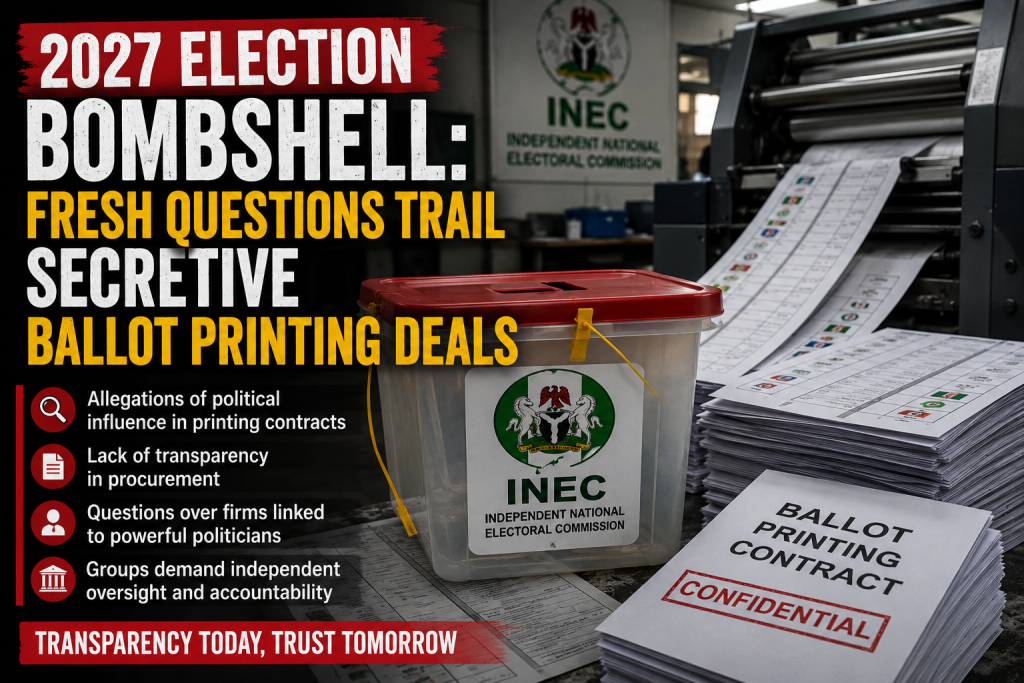
According to the publication, concerns being raised include alleged lack of transparency in procurement procedures, fears over political affiliations linked to some firms, and questions surrounding the qualifications of contractors handling sensitive electoral materials.
The report also calls for closer scrutiny from journalists, civil society organisations, and independent oversight institutions ahead of the 2027 elections.
Political analysts say the issue goes beyond party politics and touches directly on democratic credibility.
Calls for Stronger Oversight
Governance advocates are now demanding:
- Transparent procurement procedures
- Independent monitoring of ballot production
- Public disclosure of election contractors
- Stronger institutional oversight
Observers warn that confidence in elections can weaken long before voting day if Nigerians begin losing trust in the systems operating behind the scenes.
As preparations for the 2027 elections continue, scrutiny over Nigeria’s electoral processes is expected to intensify nationwide.
Source: Nairaland Discussion Thread